Why Omni-Channel Is No Longer Optional for Amazon Sellers
Feb 12, 2026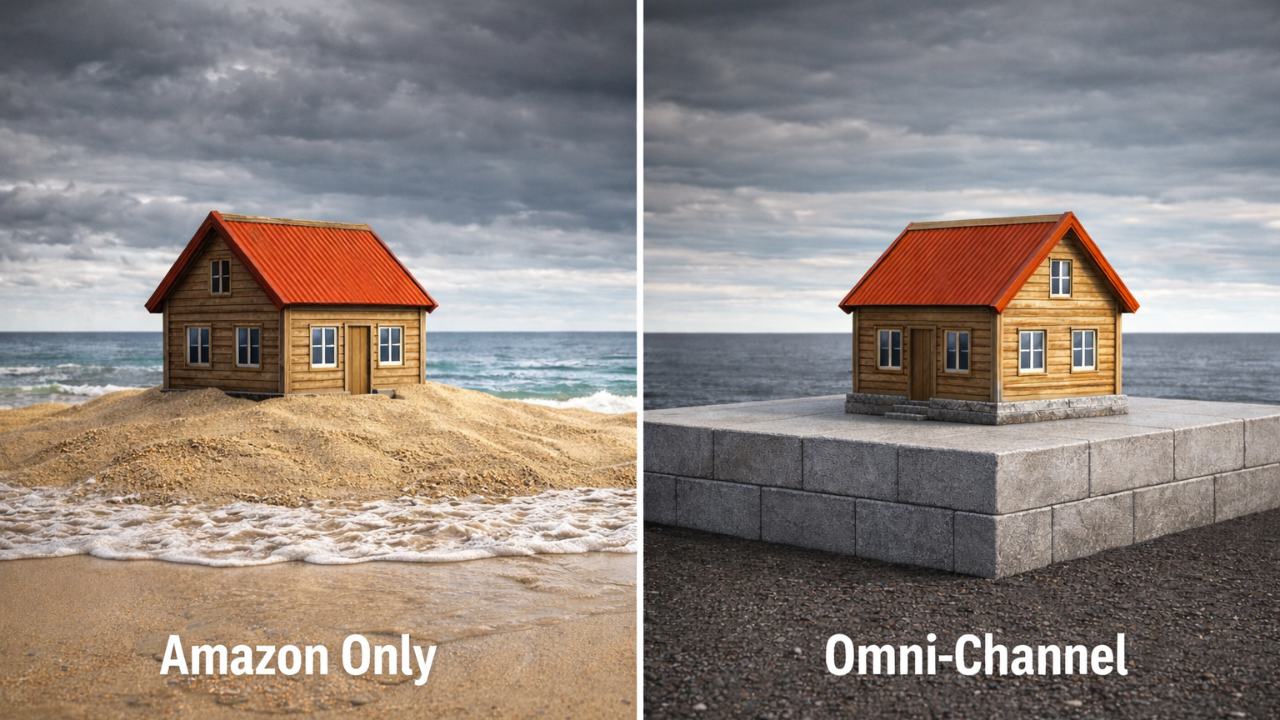
For a long time, Amazon sellers could get away with one thing:
Just sell on Amazon.
And honestly? For a while, that worked beautifully.
But that world is gone.
Today, relying on Amazon alone is one of the riskiest business decisions I see product-based business owners making, especially sellers doing six or seven figures who think they’re “safe.”
They’re not.
And I don’t say that to scare you.
I say it because I’ve lived it.
The Amazon Wake-Up Call No One Wants
I’ve built and scaled multiple product-based businesses. I love Amazon. I still sell on Amazon. It’s a powerful channel.
But I’ve also watched sellers wake up to:
- A listing was suppressed overnight
- A competitor is undercutting pricing with a knockoff
- Ad costs are creeping up until margins disappear
- A single policy change wipes out momentum
And suddenly the question becomes:
“What do I do now?”
If Amazon sneezes, your entire business shouldn’t catch pneumonia.
That’s the difference between having an Amazon business and having a real brand.
What Omni-Channel Actually Means (Because It’s Not Just “Sell Everywhere”)
Omni-channel is one of those buzzy terms that gets thrown around with zero clarity.
So let me simplify it.
Omni-channel does not mean:
- Being on every platform
- Chasing shiny objects
- Doing more for the sake of doing more
Omni-channel does mean:
- You own the customer relationship
- Your traffic doesn’t depend on one algorithm
- Your revenue isn’t held hostage by one platform
It’s about intentional diversification, not chaos.
Amazon is one channel.
Your website is another.
Email is another.
Retail, wholesale, TikTok, Etsy, Walmart, those are all tools, not distractions, when used correctly.
The Biggest Lie Amazon Sellers Tell Themselves
Here’s the lie I hear all the time:
“Once I get Amazon dialed in, then I’ll worry about other channels.”
But Amazon never gets “done.”
There’s always:
- Another competitor
- Another ad tweak
- Another pricing shift
- Another fee
Waiting until Amazon feels “stable” is like waiting for the ocean to stop moving before you get in the boat.
Omni-channel isn’t something you do after Amazon.
It’s how you protect Amazon.
Why the Smartest Amazon Sellers Are Expanding Now
The sellers who are winning right now aren’t abandoning Amazon.
They’re:
- Using Amazon as discovery, not dependency
- Building email lists so they can talk to customers again
- Creating DTC offers that increase lifetime value
- Testing new channels before they need them
They’re thinking like CEOs, not just sellers.
And that’s the shift I want for you.
The Real Goal: Optionality
When you’re omni-channel done right, something powerful happens:
You have options.
- If ad costs spike → you have another lever
- If a listing goes down → your revenue doesn’t
- If Amazon changes the rules → you don’t panic
That’s freedom.
That’s leverage.
That’s how you build a business that lasts.
Start Here (Without Overwhelm)
If you’re thinking, “Okay Becky, but where do I even start?” here’s my honest answer:
Don’t add everything.
Add one intentional layer.
That might be:
- A simple Shopify site that mirrors your Amazon offer
- An email opt-in tied to your packaging
- One non-Amazon traffic source you actually commit to
Omni-channel is built step by step, not overnight.
And when it’s done right, it makes everything else easier.
Final Thought
Amazon is still an incredible opportunity.
But building your entire business on rented land?
That’s no longer a strategy, it’s a gamble.
Omni-channel isn’t optional anymore.
It’s the difference between hoping your business survives…
and knowing it will.