The 3-Layer Omni-Channel Model: How Amazon Sellers Can Expand Without Creating Chaos
Feb 13, 2026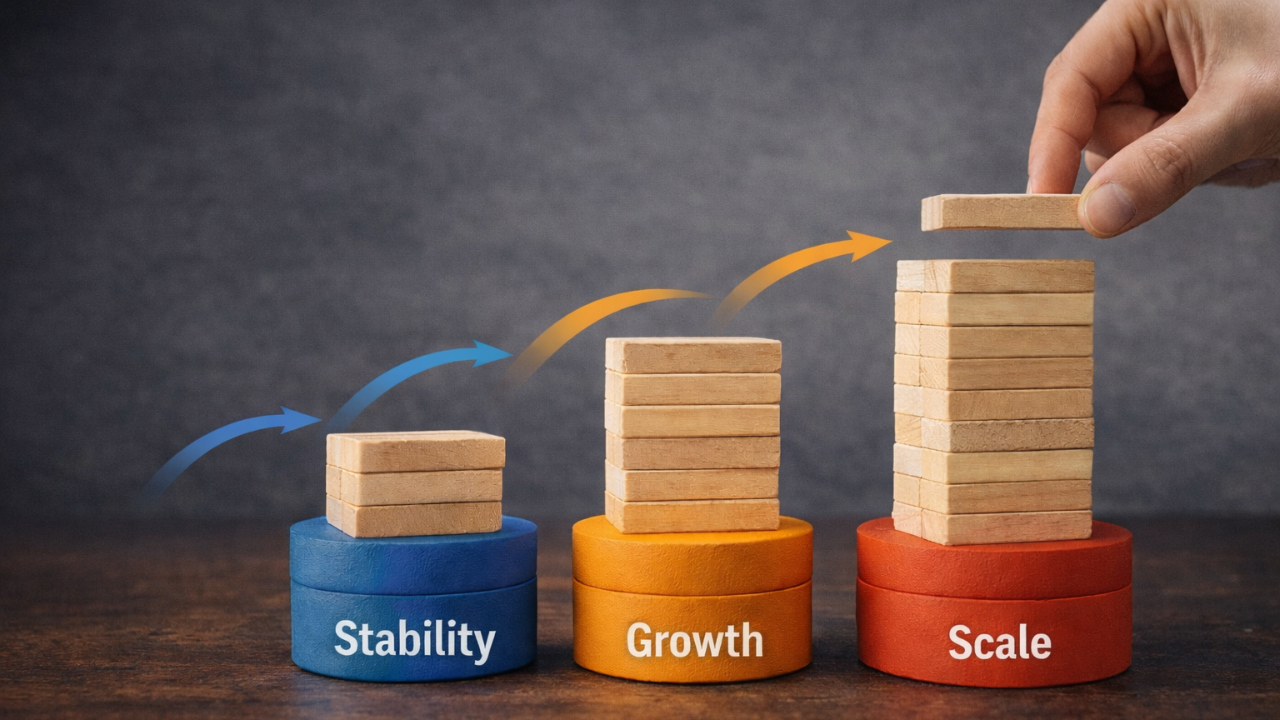
If you’re an Amazon seller and you’ve realized omni-channel matters…
The next thought is usually:
“Okay… but I’m already maxed out. How do I expand without blowing up my business?”
I’ve seen this go wrong more times than I can count.
Good sellers. Solid products. Healthy revenue.
Then they decide they need:
- Shopify
- TikTok
- Retail
- Walmart
- Influencers
- Email funnels
- Wholesale
All at once.
Three months later, they’re exhausted, scattered, and Amazon's performance starts slipping.
Omni-channel is powerful.
But unmanaged expansion is chaos.
So let me show you the way I actually built it.
What Is an Omni-Channel Strategy for Amazon Sellers?
Before I give you the model, let’s define this clearly.
An omni-channel strategy for Amazon sellers means:
- You do not rely on Amazon as your only revenue source
- You intentionally add sales channels that support and strengthen each other
- You own more of the customer relationship
It does not mean being everywhere.
It means building layers strategically.
And that’s where most people get it wrong.
The 3-Layer Omni-Channel Model
I teach this in stages because stages create stability.
Not noise.
Layer 1: Stability (Before You Expand Anything)
This is where most sellers skip ahead.
If your Amazon business is unstable, expansion will only amplify those problems.
Stability means:
- You know your margins
- You understand your TACOS and ACOS
- Your inventory planning is clean
- Your pricing strategy is intentional
- You have clear SOPs for operations
- You know your top 20% SKUs are driving 80% of revenue
If you cannot answer:
“What is my contribution margin per unit after ads?”
“What is my contribution margin per unit after ads?”
You are not ready for Layer 2.
I worked with a seller doing $2.3M who wanted to launch retail.
When we dug into the numbers, they didn’t actually know their true blended margin after fees and ad creep.
Retail would have crushed their cash flow.
Layer 1 protects you.
Layer 2: Growth (Controlled Channel Expansion)
Once Amazon is stable, we can add leverage.
This is where most sellers think “new platform.”
But Layer 2 is not about platforms.
It’s about ownership.
The three smartest moves in this stage are:
1. Build a Conversion-Focused Website
Not a pretty website.
A converting website.
A converting website.
You are not trying to beat Amazon traffic.
You are creating:
- A brand home
- Higher margin sales
- Bundle control
- List building
2. Capture Email (Through Packaging + Offers)
Amazon does not give you customer ownership.
But your packaging does.
Insert cards.
QR codes.
Bounce-back offers.
Warranty registrations.
QR codes.
Bounce-back offers.
Warranty registrations.
Email is your insurance policy.
3. Build a Repeat Purchase Engine
If you sell consumables, this is obvious.
If you don’t — bundles and cross-sells matter.
Layer 2 increases lifetime value.
And here’s the twist most people miss:
When done correctly, Layer 2 actually strengthens Amazon's performance.
External traffic.
Brand search lift.
Higher repeat rate.
Brand search lift.
Higher repeat rate.
Omni-channel doesn’t hurt Amazon.
It protects it.
It protects it.
Layer 3: Scale (Now You Add Additional Channels)
This is where retail, wholesale, TikTok Shop, Walmart, and strategic partnerships come in.
But only once:
- Your numbers are clean
- Your operations can handle it
- Cash flow is strong
- Inventory forecasting is mature
Scale without stability creates stress.
Scale after growth creates leverage.
There’s a massive difference.
Why Most Amazon Sellers Expand the Wrong Way
Here’s what usually happens.
A seller hits $1M or $2M.
They feel plateaued.
They panic.
They think a new channel will fix everything.
But a new channel doesn’t fix:
- Weak conversion
- Poor pricing
- Bad margins
- No email list
- No systems
It multiplies them.
Omni-channel is not a growth hack.
It’s a business model shift.
Where Should You Start? (Based on Revenue Stage)
Let’s make this practical.
Under $1M
- Clean up margins
- Dial in TACOS
- Build a simple converting website
- Start collecting emails
$1M–$3M
- Strengthen email marketing
- Add external traffic intentionally
- Improve AOV through bundles
- Test small retail pilots
$3M+
- Diversify channels strategically
- Protect Amazon via brand ecosystem
- Expand wholesale intentionally
- Consider partnerships and licensing
The stage matters.
Timing matters.
Strategy matters.
The Real Goal of Omni-Channel
The goal is not more channels.
The goal is optionality.
If Amazon hiccups, your revenue doesn’t collapse.
If ad costs spike, you have other levers.
If competitors undercut pricing, your brand equity protects you.
That’s what we’re building.
Not chaos.
Leverage.
Final Thought
Amazon is still one of the greatest distribution channels in the world.
But building your entire business on one platform?
That’s not a strategy anymore.
It’s exposure.
If you want to expand beyond Amazon without blowing up what you’ve built, you need layers.
Not noise.
And if you want someone to look at your business and tell you exactly which layer you’re in and what to build next, that’s the work I do every day. Reach out to me if you need help.
FAQs
1. What does omni-channel mean for Amazon sellers?
Omni-channel means you sell across multiple connected channels instead of relying only on Amazon. This usually includes Amazon, your own website, email marketing, and selected growth channels like retail, Walmart, or social commerce. The goal is to reduce risk and stabilize revenue.
2. Why is omni-channel important for Amazon sellers?
Amazon is a powerful platform, but it’s still rented land. Policy changes, rising ad costs, listing issues, or competitors can impact revenue overnight. An omni-channel strategy protects your business by diversifying traffic and sales channels.
3. Should I leave Amazon to go omni-channel?
No. Omni-channel is not about leaving Amazon; it’s about strengthening your business beyond Amazon. Amazon often remains the primary discovery channel while other channels increase profitability and customer ownership.
4. What is the first step to going omni-channel?
The first step is stability. Make sure your Amazon business is profitable and predictable before expanding. That includes knowing your margins, ad spend, inventory cycles, and top-performing products.
5. Do I need a Shopify website if I sell on Amazon?
Yes — but not for the reason most people think. Your website gives you higher margins, brand control, and the ability to capture customer emails. It supports Amazon rather than competing with it.
6. How does email marketing help Amazon sellers?
Email marketing allows you to build a direct relationship with customers. Since Amazon doesn’t give you buyer data, email helps create repeat purchases, launch leverage, and long-term brand value.
7. What channels should Amazon sellers add first?
Most sellers should add:
- A conversion-focused website
- Email capture and follow-up
- External traffic strategies
Only after those are working should you consider retail, wholesale, or additional marketplaces.
8. When should an Amazon seller expand beyond Amazon?
Expansion makes sense when:
- Your margins are healthy
- Operations are stable
- Inventory planning is reliable
- You understand your numbers
Expanding too early creates chaos instead of growth.
9. What is the biggest mistake Amazon sellers make with omni-channel?
The biggest mistake is trying to launch too many channels at once. Omni-channel should be built in layers, not all at the same time.
10. Can omni-channel actually increase Amazon sales?
Yes. External traffic, stronger brand recognition, and repeat customers often improve Amazon's performance through higher brand searches and conversion rates.
11. How many sales channels should a small Amazon brand have?
There’s no magic number. Most successful brands start with Amazon plus one or two supporting channels — usually a website and email — before scaling further.
12. Is omni-channel only for large brands?
No. Small and mid-sized brands benefit the most because omni-channel reduces risk and builds long-term stability before scaling.